For Your Business
Cloud Computing for the Retail Industry: Benefits and Future Trends
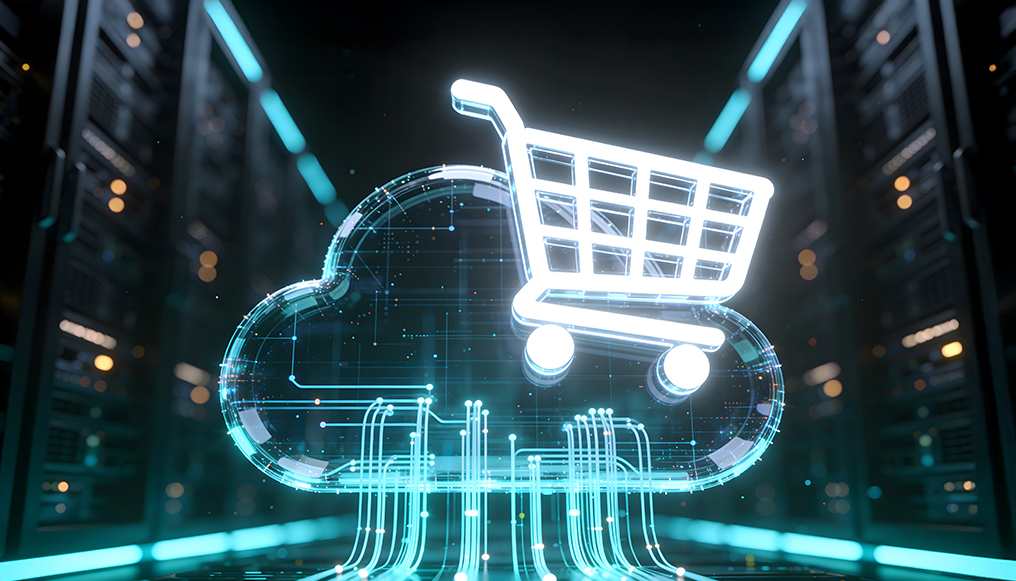
It appears that a key reason many modernization efforts fail is that technology deployment is not aligned with operational strategy and execution. In the enterprise retail arena, dependence on fragmented, legacy architecture, disparate, on-premises data, and disconnected legacy applications places retailers in a reactive position, making it difficult to be agile, creating technical debt, and diminishing customer interactions.
For retail leaders – ranging from CIOs and CTOs managing architectural debt to COOs striving to optimize logistics and omnichannel delivery – achieving true resilience requires a fundamental shift in how computing resources and enterprise data are managed.
Cloud for retail operations will be much more than infrastructure upgrades in 2026. It has become the required digital foundation to scale processes, make commerce secure, and roll out smart technology. Technology alone will not cause transformation; it is the synergy of strategy, systems, operations, and execution that breaks silos and enables a cohesive and data-backed process flow.
In this guide, we will examine the structural significance of cloud computing in retail, the key business value drivers of cloud technology for retailers, and trends leaders should focus on to adopt cloud-native architectures and deliver measurable business growth.
What Is Cloud Computing in Retail?
In the retail sector, cloud computing is the strategic deployment of scalable, on-demand computing resources – including data storage, processing power, server infrastructure, and enterprise applications – hosted on the internet by cloud service providers. Instead of managing complex on-premises server rooms and fragmented hardware across individual storefronts, retailers centralize their digital operations within secure, highly elastic cloud environments.
Cloud technology in retail is usually deployed across three primary architectures:
- Public Cloud: Highly scalable, cost-efficient infrastructure hosted by major cloud providers, ideal for processing massive volumes of transactional data and running consumer-facing e-commerce applications.
- Private Cloud: A private environment in the cloud, offering security controls, tunable data compliance, and dedicated hardware-often used for back office financial systems and customer data warehouses.
- Hybrid and Multi-Cloud: The integration of multiple public and private cloud environments with on-premises legacy systems. This is the preferred architecture for complex global retail enterprises, allowing them to balance operational flexibility, localized edge processing, and strict governance.
Combining these systems brings retail data management into the cloud, serving as a single source of truth that links point-of-sale devices through to downstream warehousing and distribution networks.
Why Cloud Computing Has Become Essential for Modern Retailers?
Operations may continue to innovate more rapidly than organizations align. Historically, retail businesses operated on distributed databases, legacy ERPs coded in custom languages, and data systems that processed data in batch mode. In the year 2026, the rigidity imposed by legacy infrastructures will emerge as a significant operational risk for businesses operating in a world of fluid demand, multi-channel, and real-time.
Cloud computing in retail has become a strategic requirement for three core reasons:
1. Eliminating the Limitations of Legacy IT Infrastructure
On-premise infrastructure is inflexible and costly. Legacy servers frequently max out under high trading events such as seasonal sales or ‘black swan’ spikes in demand, resulting in slow transactions, failed checkouts, and lost sales. Cloud computing resolves these issues with dynamic elasticity. Businesses can immediately scale their compute up and down based on their live traffic loads, paying only for what they use.
2. Dismantling Fragmented Data Silos
This disjointed data environment makes a unified view of the business impossible. Retailers lose out due to misplaced inventory, inaccurate customer profiles, and decision-making based on outdated, fragmented information. Adopting cloud-native databases enables retailers to bring disparate data sources together in a single real-time location, providing a bedrock on which sophisticated business intelligence capabilities can be built.
3. Supporting Rapid Modernization and Agility
Implementing new retail functionality in legacy systems takes months of manual work and testing. With the cloud,, retailers have access to decoupled microservices, API interconnectivity, and out-of-the-box software. This agility makes organizations more capable of testing retail technology solutions, rapidly scaling the best-performing projects, and changing according to market requirements faster than the competition.
Key Benefits of Cloud Computing in Retail
When enterprise buyers consider the merits of modernization investments, they want operational confidence, risk mitigation, scalability, and business outcomes-not a trendy splash. The business advantages of cloud computing in the retail sector span every tier of the business. Here’s how technology investments in cloud computing become predictable, operational advantages:
| Strategic Benefit | Operational Impact | Enterprise Outcome |
| Architectural Scalability | Scales through server limitations allowing any platform to accommodate massive transaction peaks without dropping performance. | Business Resilience: No system downtime in high trading seasons and protect brand reputation and grab all conversion opportunities |
| Unified Data Management | Unifies inventory, sales, customer, and logistics data into a single, governed cloud-native repository. | Decision Intelligence:Real-time operational insights that empower leaders to make proactive decisions based on accurate data. |
| Operational Elasticity | Transitions IT expenditure from rigid capital expenses (CapEx) to flexible, demand-driven operational expenses (OpEx). | Cost Optimization:Reduced capital overhead and reduced resource waste by dynamically aligning hosting costs with actual transactional volume. |
| Infrastructure Resilience | Leverages geo-redundant data centers, automated backup systems, and continuous failover protocols. | Business Continuity:Enhanced protection against local outages, hardware failures, or regional disruptions. |
| Unified Governance & Security | Implements centralized access controls, continuous encryption, and automated compliance auditing. | Enterprise Risk Reduction:Mitigates the risk of data breaches and ensures compliance with global regulations (such as GDPR or PCI-DSS). |
How Cloud Technology Is Transforming Retail Operations?
Authentic digital transformation is not simply implementing technology over old-style procedures. The organization as a whole needs to transform its operations; the strategy, operations, execution, governance, and technology should work in perfect synchrony. Setting up modern cloud infrastructure is how retailers can implement intelligent automation in retail and convert tedious manual processes into swift, predictable ones.
There are three primary areas where cloud technology accelerates operational efficiency:
1. Accelerating Retail Process Automation
Many back-office retail processes – such as vendor invoice reconciliation, purchase order creation, and employee shift scheduling – rely on repetitive, manual data entry. Retail process automation, when deployed on a scalable cloud infrastructure, connects these workflows across departments.
- Procurement Automation: As inventory levels decline and are automatically detected by the cloud database, purchase orders can be created and electronically dispatched to authorized vendors.
- Financial Reconciliation: Cloud-based automation can ingest invoices from multiple suppliers, cross-reference them with delivery notes and purchase orders, and automatically flag discrepancies, drastically reducing the administrative burden on finance teams.
- Workflow Intelligence: Automation governance frameworks make sure that automated activities are governed and audited, safeguarding compliance while providing greater speed.
2. Enabling Advanced AI in Retail Industry Systems
Advanced analytics and artificial intelligence require immense computational power and structured data. Trying to run AI models on legacy, on-premises systems is slow and cost-prohibitive. Cloud computing provides the highly elastic processing environments required to run machine learning models at scale.
- Predictive Demand Forecasting: AI models run in the cloud can process massive datasets—including historical sales, local weather trends, competitor promotions, and social signals—to predict localized product demand with extreme accuracy.
- Dynamic Pricing Engines: Retailers can run automated pricing engines, setting automatically fluctuating margins for storefronts and digital presences at a granular level.
- In-Store Smart Technology: IoT sensors, computer vision devices, and auto restocking machines are used for tracking the shelf condition and raising real-time alerts to the associates.
3. Optimizing Logistics and Supply Chain Workflows
Blind spots exist and are most prominent in logistics operations. Slowdown in order fulfillment arises when a third-party shipping carrier, a warehouse management system (WMS), and a central inventory management database don’t interface in real-time.
Cloud-based retail business process automation provides end-to-end supply chain visibility. Integrating logistics providers and retail backend systems in a central cloud platform enables the retailer to automate order routing to the closest inventory and to provide real time shipment tracking and delivery updates. Workflow intelligence saves transportation time and costs while preserving margin integrity.
Cloud Computing and Omnichannel Retail
For today’s customer, the lines between online and offline are blurred; they expect a seamless experience that spans both: they want to research an item on their mobile app, check its availability at a store in real-time, order online, then pick it up at the store later that same day. Recreating this experience across aging, fragmented networks is an operational impossibility.
Cloud computing serves as the integration layer that enables seamless omnichannel retail. It unifies three core components:
Omnichannel Cloud Core
- Unified Inventory & Order Database
- Real-Time Global Inventory Sync
- Central Customer Profile & Loyalty
This further enriches –
- E-Commerce, Mobile App, Website Sales
- In-Store POS, Smart Kiosks, Store Terminals
- Logistics/WMS, Fulfillment, Fleet Sync
1. Real-Time Inventory Synchronization
If an e-commerce customer buys the last unit of a popular item, this must update the brick-and-mortar systems instantly, or a walk-in customer may be told there is no stock. If a brick-and-mortar store sells an item, the channels need to update instantly. Cloud databases sync in real-time between all channels, ensuring no discrepancies and maintaining the integrity of customer trust.
2. Centralized Customer Profiles
Without cloud-native CDPs, which combine loyalty data, online browsing data, and in-store purchase data in the respective isolated, offline databases, retailers do not have the ability to understand the customer. They enable customer experience automation systems to display the most relevant product recommendations and personal offers, and deliver unified support across the online and offline world.
3. Agile Fulfillment Workflows
For omnichannel fulfillment models such as Buy Online, Pick Up In Store (BOPIS) and Ship from Store, very tight coordination between the brick-and-mortar storefronts and the network of regional warehouses is essential. A cloud-based order management system (OMS) automatically orchestrates all of these disparate fulfillment flows. It evaluates the ship to, where inventory is housed, shipping costs, and carrier capabilities, routing to the optimal fulfillment center for speed and margin.
How Solutionara Helps Retailers Leverage Cloud Technology and Automation?
Solutionara is not another cookie-cutter software provider or transactional outsourcing vendor. We are a strategic digital transformation and AI consultancy focused on combining top-tier strategy with robust, embedded execution capability. We realize that leaders are looking for conviction in transformation, resilient architectures, and predictable execution rather than more technology “buzz”.
Underpinning everything we do with our SIGHT philosophy, we partner with business and IT leadership, providing visibility and assurance for all your key technology decisions. We have built a unique blend of executive-level advice and practical, boots-on-the-ground expertise, delivering cloud modernization programs in line with your strategic business objectives.
Our Cloud Modernization and Intelligent Automation Capability Matrix
To enable future-ready operations for enterprise retailers, we provide targeted services in the following four modernization layers:
Enterprise Cloud Architecture
– Cloud Data Management Platforms
– Centralized Security & Governance
– Hybrid & Multi-Cloud Design
– Infrastructure Resilience Systems
Intelligent Process Automation
– Retail Workflow Automation
– Cloud-based RPA Implementations
– Automating back office procedures
– Supply Chain & Inventory Integration
Measurable Enterprise Outcomes
– Improved Operational Agility
– Enterprise Scalability
– Reduced IT Capital Costs
– Unlocked Decision Intelligence
By partnering with Solutionara, you get a trusted implementation partner who understands your operating environment and minimizes implementation risks by providing the best-fit business solution that is scalable and secure.
Frequently Asked Questions
What retail processes can be automated using cloud-based technologies?
Cloud infrastructure allows retailers to automate back office, supply chain, and customer-facing processes. The main opportunities arise from:
- Inventory Reconciliation:Automatically synchronizing stock levels across online storefronts and physical warehouses.
- Purchase Order Generation:Automatically triggering restock orders to vendors when inventory reaches predefined thresholds.
- Order Routing and Fulfillment:Directing online orders to the most efficient regional warehouse, retail store, or 3PL partner based on location and cost.
- Financial Back-Office Tasks:Automated invoice matching, ledger updates, and basic expense reconciliation.
How can cloud computing and RPA work together in retail operations?
Cloud computing provides the secure, scalable, and highly connected environment necessary to deploy and manage Robotic Process Automation (RPA) tools at an enterprise scale. RPA software bots run inside the cloud to execute repetitive tasks – such as moving data between legacy POS terminals, modern e-commerce databases, and financial systems – without manual input. Transitioning RPA to the cloud reduces local infrastructure costs, simplifies software updates, and ensures that bots can scale dynamically in response to transactional spikes.
What are some of the common challenges retailers face during cloud adoption?
Enterprise cloud migration involves several common challenges:
- Legacy System Complexity:Integrating outdated, heavily customized on-premises software with modern cloud-native systems.
- Disconnected Data Ecosystems:Resolving fragmented databases and inconsistent data formats across different departments.
- Governance and Security Concerns:Ensuring strict compliance with international data privacy regulations (such as GDPR or PCI-DSS) during transition.
- Workforce Resistance:Helping employees adapt to new digital workflows and cloud-based operating systems.
How can retailers ensure a smooth cloud migration process?
Retailers can mitigate migration risks by following a structured, phased approach:
- Strategic Assessment:Conduct a deep operational audit of all existing IT infrastructure and business dependencies.
- Phased Migration Strategy:Avoid “rip-and-replace” methods. Migrate non-critical workloads and databases to the cloud first, testing systems in parallel before moving core transaction systems.
- Rigorous Data Governance:Establish clear data ownership, naming standards, and security protocols before migration begins.
- Strategic Partnership:Collaborate with an experienced transformation partner like Solutionara to provide both strategic direction and deep execution support throughout the migration journey.
What role does cloud computing play in retail digital transformation?
Cloud computing is the key enabling technology behind digital transformation in retail. It becomes the single integration layer, replacing silod, on-premise infrastructure, with a central digital backbone. Hosting data and applications in the cloud provides retailers the architectural elasticity, data visibility, and operational agility needed to successfully deploy automation, embed predictive AI, and achieve consistent omnichannel experiences.