For Your Business
Grocery Digital Transformation: From Fragmented Systems to AI-Ready Operations
A Founder’s Perspective: The Real Challenge Behind Grocery Transformation
After spending years working with enterprise organizations navigate technology transformation, I have learned one thing: most organizations do not struggle because they lack technology.
They struggle because the technology they already have does not work together the way the business needs it to.
Most grocery organizations have invested heavily in systems that run critical parts of the business — point-of-sale, ERP, eCommerce platforms, warehouse management, supplier platforms, loyalty programs, and analytics tools.
Each system serves an important purpose. The challenge is that many of them operate independently.
I have seen this create the same challenges again and again: teams working with different versions of information, decisions taking longer than they should, and opportunities being missed because the business cannot see the complete picture.
For grocery companies operating with tight margins, these gaps quickly become business problems.
The Problem Is Not a Lack of Technology
A common mistake in transformation is starting with the question: “What new platform should we buy?”
But technology investments only create value when they help the business achieve better outcomes.
A store team may know what products sold today. A warehouse team may know available inventory. Marketing may understand customer behavior. Finance may track profitability.
The challenge is bringing those views together.
When systems are disconnected, businesses spend valuable time reconciling information instead of using that information to improve decisions.
The Business Impact of Disconnected Systems
In grocery, small operational issues can have a big impact.
Disconnected systems can lead to:
- Inventory challenges that create empty shelves or excess stock.
- Promotions that are difficult to measure and optimize.
- Slower responses to changes in customer demand.
- Inconsistent experiences across digital and physical channels.
- Leadership decisions based on information that arrives too late.
The systems themselves are often not the problem. The problem is the gap between them.
Start With Outcomes, Not Technology
The best grocery digital transformation conversations do not start with technology.
They start with business outcomes.
- Are we trying to improve product availability?
- Reduce manual processes?
- Improve forecasting?
- Create a better customer experience?
- Give leaders faster access to information they can trust?
One thing I have learned is that transformation rarely happens because a company buys a new platform. It happens when technology starts supporting the way the business actually operates.
When the business outcome is clear, technology choices become much more focused.
Why AI and Automation Need the Right Foundation
AI is creating exciting opportunities across grocery. It can help improve forecasting, personalize customer experiences, optimize promotions, and support faster decisions.
But one lesson I have seen repeatedly is that AI only delivers value when the underlying data and processes are reliable.
If inventory information is incomplete, forecasts become less accurate. If customer data is fragmented, personalization becomes limited. If product information is inconsistent, automation struggles.
AI does not fix a weak foundation. It makes the quality of that foundation even more important.
That is why connected systems, trusted data, and better processes need to come before scaling AI across the enterprise.
Beyond Integration: Building a Smarter Business Foundation
Integration is an important part of transformation, but it is only one piece of the journey.
At Solutionara, we help organizations connect business goals with technology execution. Our approach brings together business technology strategy, enterprise architecture, data modernization, intelligent automation, operational transformation, and AI-enabled delivery.
The goal is not simply connecting applications.
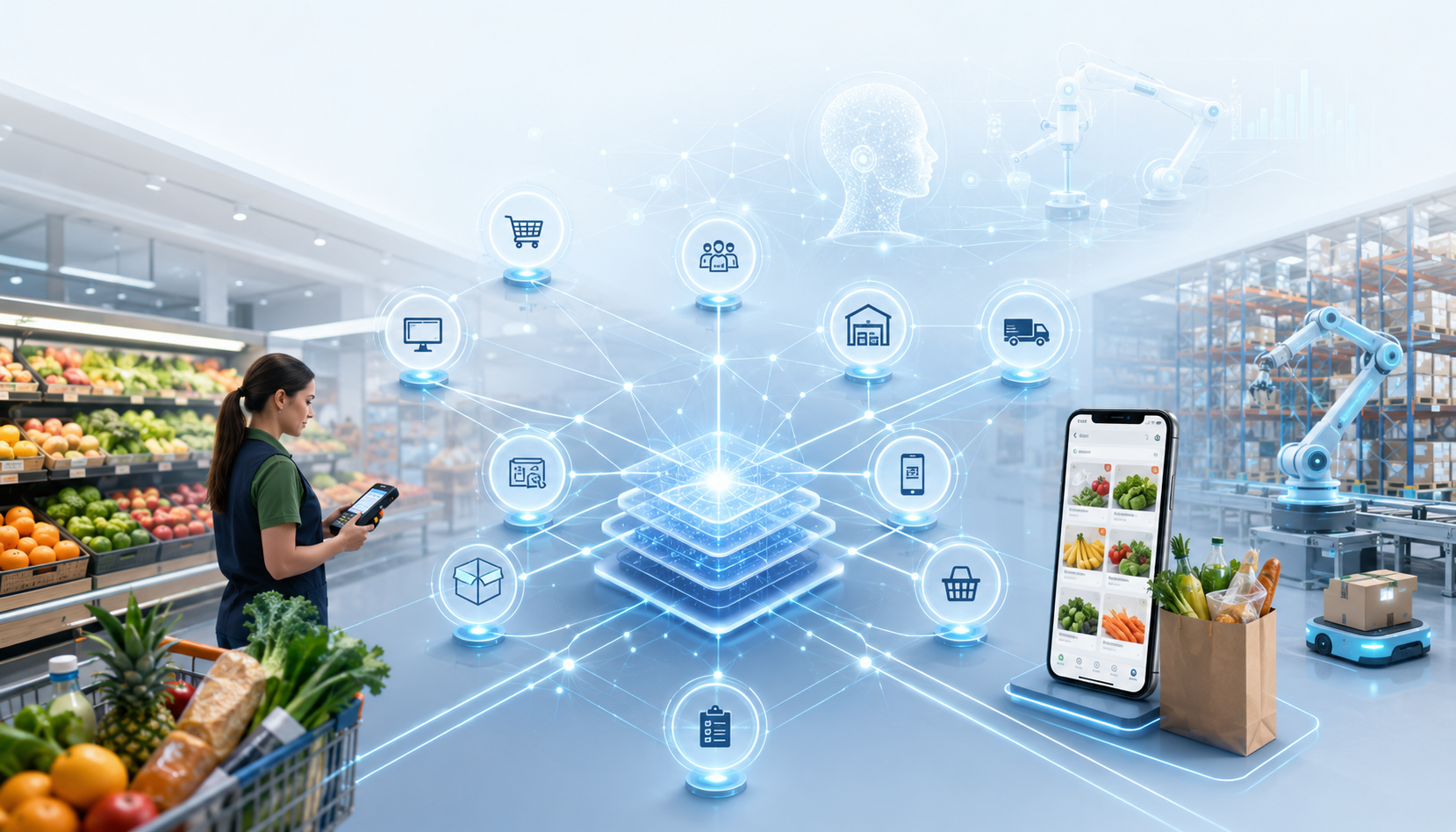
The goal is helping businesses operate with better visibility, automate where it creates value, and create the foundation needed for practical AI adoption.
Our work with grocery and retail organizations has reinforced one important lesson: successful digital transformation is not about adding more technology. It is about creating the right foundation where data, systems, automation, and AI can work together to improve measurable business outcomes.
What This Looks Like in Practice
We recently partnered with a leading North American grocery retailer to define an enterprise modernization roadmap that unified product, inventory, customer, and integration capabilities across multiple business platforms.
By establishing a governed data and integration foundation, the organization is building the foundation for cross-functional visibility, is enabling reduced reliance on fragmented legacy processes, and is positioned to support AI-ready operations and faster, more confident business decisions.
This is the type of transformation we believe creates lasting value — helping organizations modernize their technology landscape while improving how the business operates, makes decisions, and delivers value to customers.
A Final Thought
One lesson I have learned from working with enterprises is that transformation rarely fails because companies lack ambition.
It fails when technology investments are disconnected from the way the business actually operates.
The companies that benefit most from AI will not necessarily be the ones that adopt the newest tools first.
They will be the ones that create the connected foundation that allows AI, automation, and better decisions to become part of everyday operations.
AI is not the starting point of transformation.
It is what becomes possible when the fundamentals are done right.
Let’s Talk
If improving operational efficiency, inventory visibility, customer experience, or AI readiness is part of your roadmap, we would be glad to compare notes.
We would be glad to compare notes to identify where disconnected systems may be limiting business outcomes.
Want to go deeper? Download our Grocery Business Transformation Guide to explore the key modernization priorities shaping the future of grocery operations.